



Indian investors have more choices than ever.
The next question is: how sophisticated should their portfolios become?
Think about how an Indian investor built a portfolio a decade or two ago. Bank deposits were often thestarting point. Gold and real estate had a place in many portfolios. Mutual funds were available, butmarket-linked investing was far less mainstream.
That picture has changed.
The Evolution of Indian Investors:
From Saving to Sophisticated Investing
The numbers tell the story.
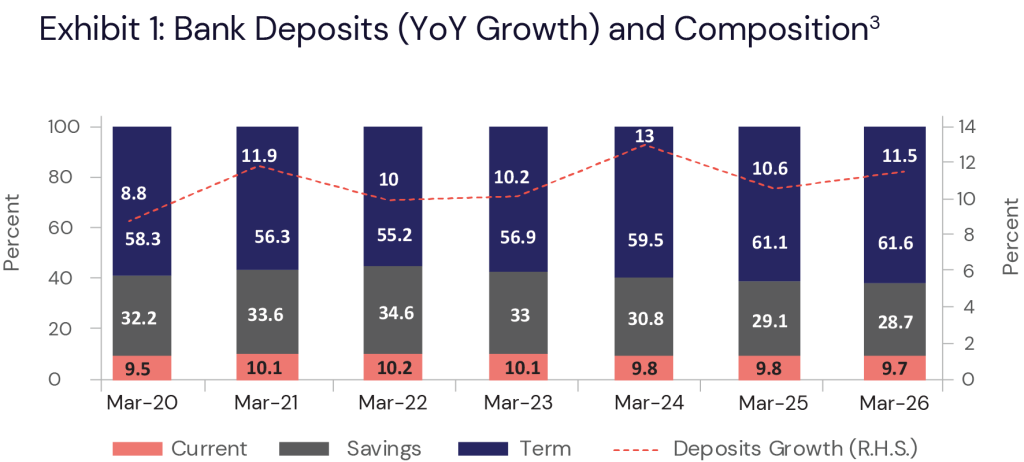
Bank deposit growth moderated from around 20% in FY11 to around 12% in FY262, while market-linked investing became increasingly familiar.
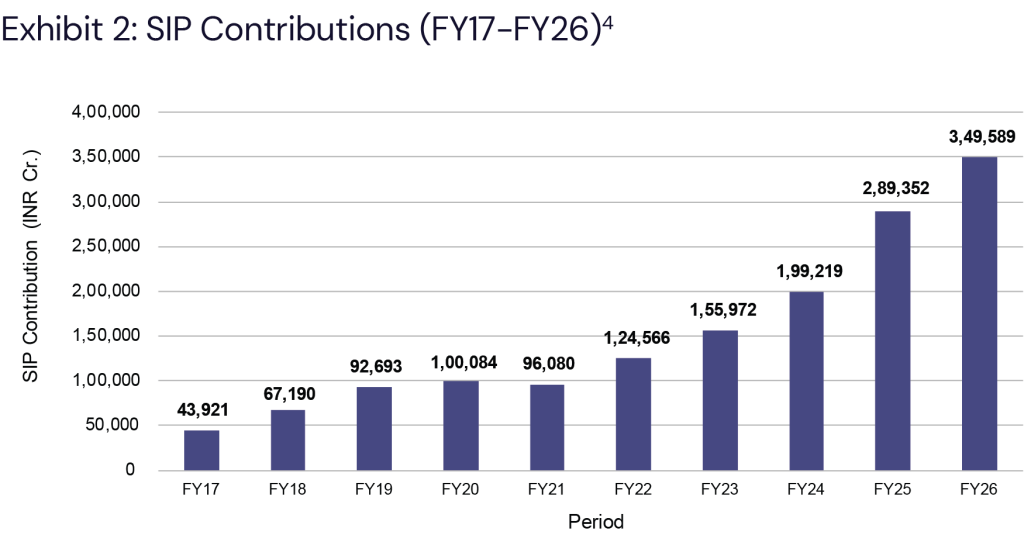
As of July 2026, mutual fund AUM stood at INR 85.76 lakh crore5. PMS assets under management stood at INR 43.26 lakh crore as of June 20266, while AIF commitments reached INR 16.94 lakh crore as of March 20267.
AIF commitments recorded a 30% five-year CAGR and 46% 10-year CAGR, highlighting the growing
appetite for alternative investment structures8.
What is driving this evolution?
Rising financial awareness, higher disposable incomes, greater mutual fund penetration and growing
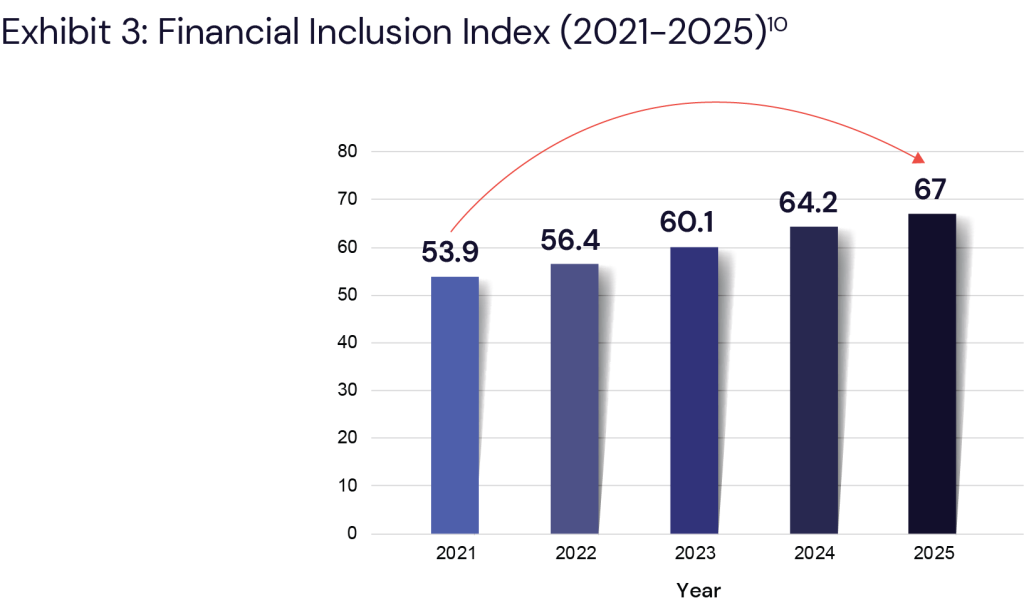
demand for diversification is all contributing. India’s Financial Inclusion Index improved from 53.0 in 2021 to 67 in 2025.
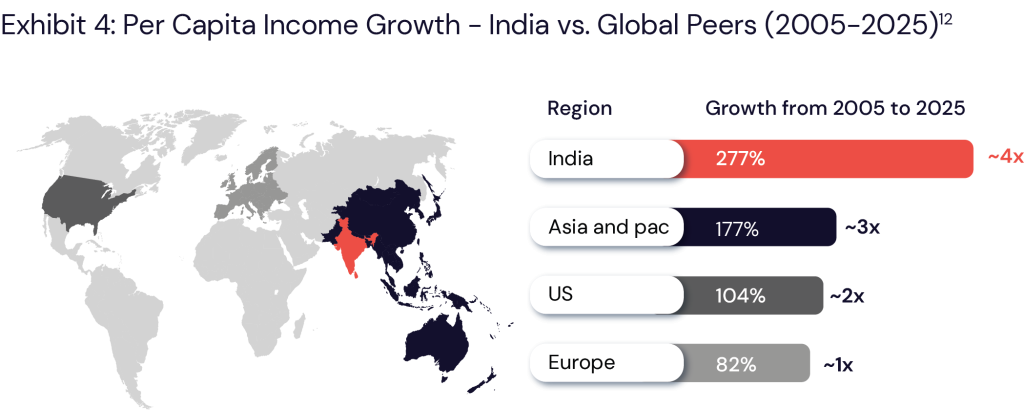
Per capita GDP has grown 277% since 2005, faster than several major global regions.
Household investment in mutual funds more than tripled from INR 1.68 lakh crore in FY23 to INR 5.44 lakh crore in FY25. In FY25, mutual funds accounted for around 79% of total household savings through the securities market.
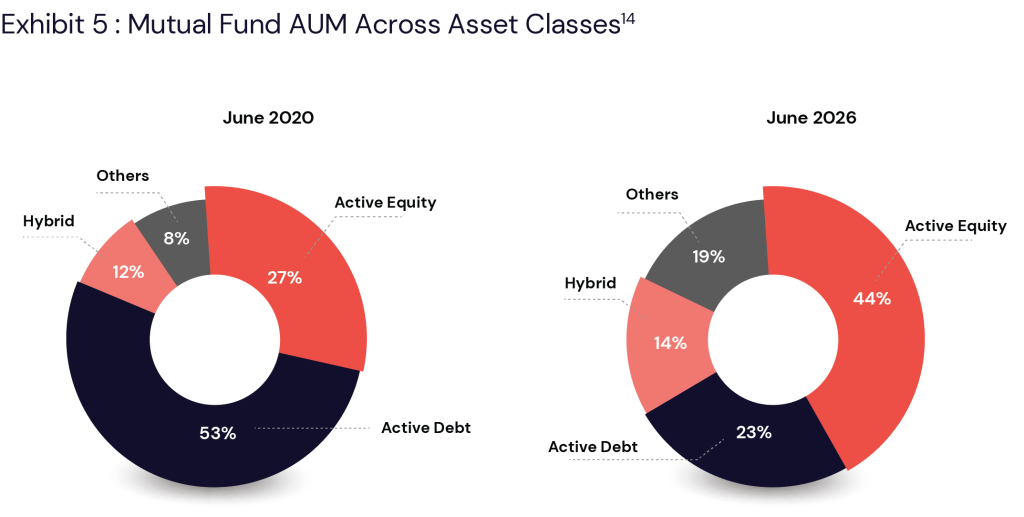
The shift toward Hybrid and Other funds highlights increasing diversification in investor portfolios, with
their combined share rising from ~20% to ~33% of AUM, reducing reliance on a predominantly Active
Debt-led allocation.


Why SIFs Matter
The backdrop is supportive.
India’s UHNWI population grew 63% between 2021 and 2026 to nearly 20,000 and is projected to grow
another 27% by 2031.
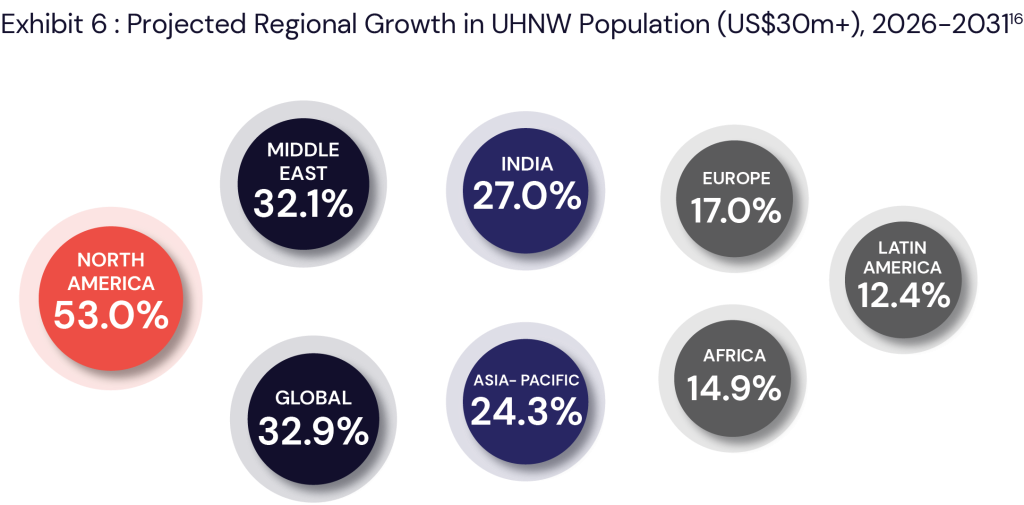
Capital markets have deepened alongside wealth creation. BSE market capitalization doubled, rising
106% between June 2021 and June 2026, while outstanding corporate bonds increased from INR 17.5 trillion in FY15 to INR 53.6 trillion in FY25.
The question is no longer whether investors have access to financial products. They do
The more interesting question is whether sophisticated investors have enough flexibility to express
different investment views.
SIFs are designed to occupy that space. They can provide:
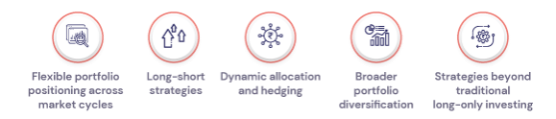
With a minimum investment of INR 10 lakh across SIF strategies, SIFs occupy a space between traditional
mutual funds and higher-threshold PMS and AIF structures.
16. i.emlfiles4.com/cmpdoc/0/4/8/5/2/1/files/146815_the-wealth-report-2026.pdf
17. All India Market Capitalization | BSE Listed stocks Market Capitalization
18. Press Release Page | Press Information Bureau
Learning from Global Markets
If SIFs bring more sophisticated strategies into India, global hedge funds offer a useful reference point.
The global hedge fund industry has grown from around USD 0.6 trillion in 2000 to USD 5.2 trillion in Q1
2026.
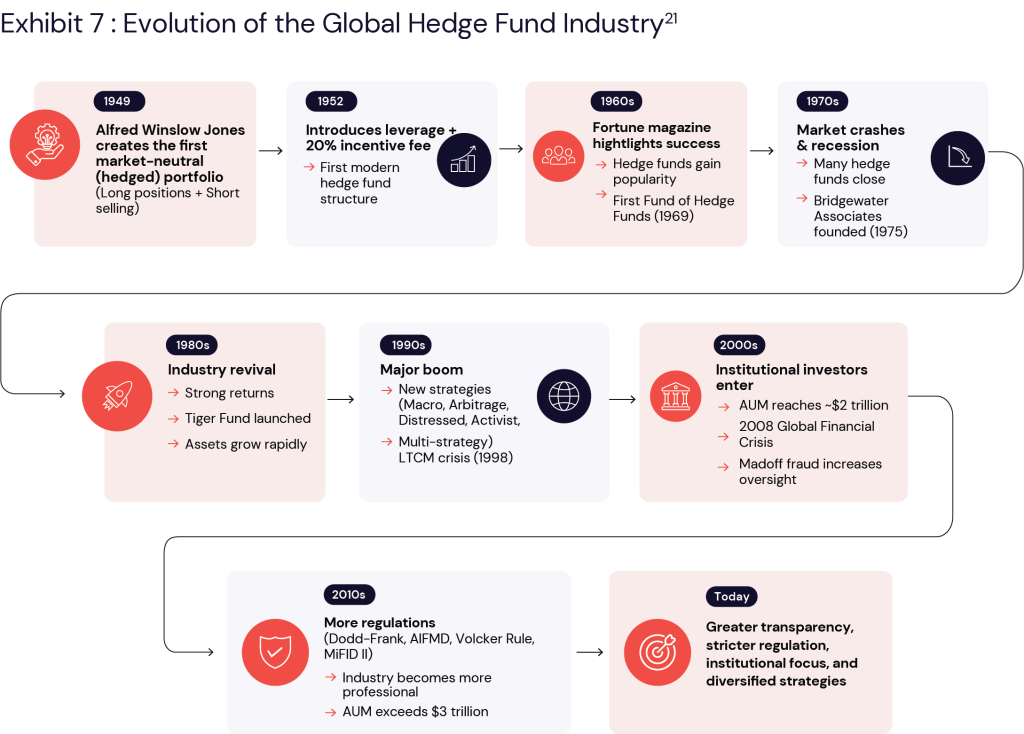
The lesson is not to replicate the global hedge fund model. It is to understand why investors increasingly
use sophisticated strategies: not simply to seek returns, but to build portfolios that can behave
differently across market environments.
Institutional interest in hedge funds is at its highest level since 2018. Equity Market Neutral, Quant
Multi-Strategy and Global Macro are among the strategies expected to be favoured in 2026. Niche hedge
funds more than doubled from 730 in 2019 to 1,570 in Q3 2024.
19. HEDGE FUND INDUSTRY: DEVELOPMENTS AND PRACTICES in: Hedge Fund industry
20. HFR Global Hedge Fund Industry Report | HFR
21. Lesson 3.1: What is a hedge fund? | Preqin Academy
22. Preqin 2025 Global Report: Hedge Funds
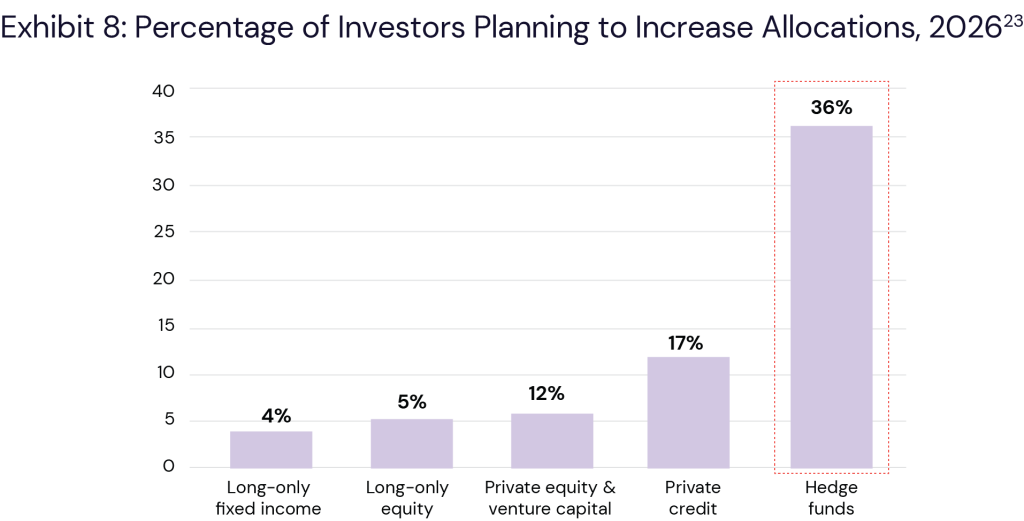
Three lessons stand out

US state and local pension funds have steadily increased their allocation to hedge funds
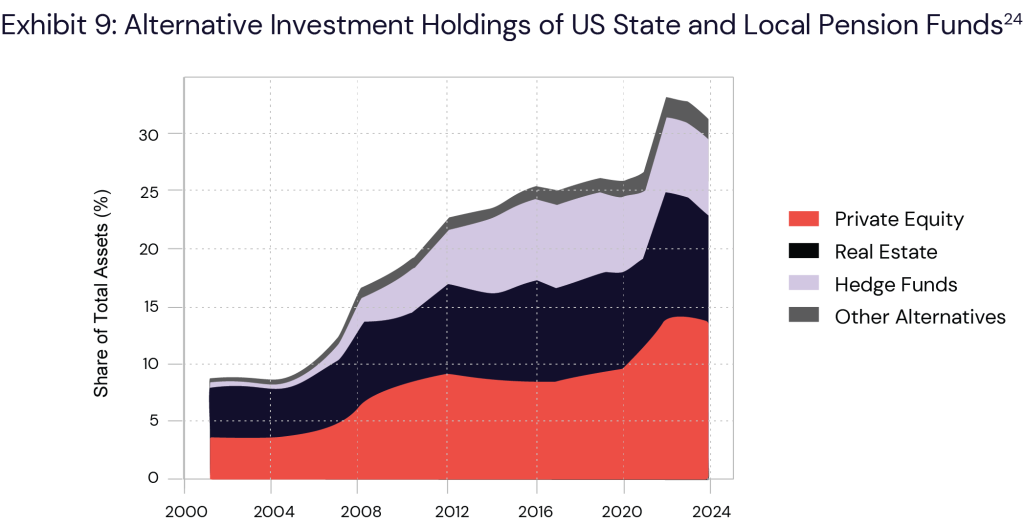
India can similarly benefit from deeper participation by pension funds, insurers and provident funds.
Sophisticated strategies need a supporting ecosystem, not just sophisticated products.
23. 2026 Hedge Fund Outlook | Barclays Investment Bank
24. Global pension asset allocations and debt markets

Alternatives account for around 42% of family office portfolios globally25. Increasingly, investors use
hedge funds as portfolio diversifiers rather than simply return maximisers.
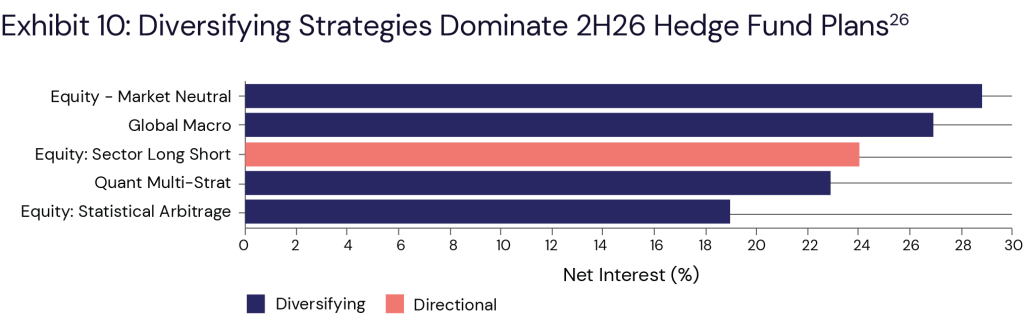
The useful question is therefore not only, “Can this strategy generate returns?”
It is also, “What role can it play in my portfolio?”

Average gross leverage across many hedge funds has been close to 3x assets27, while some quantitative
and multi-strategy funds operate at considerably higher levels.


25. blackrock.com/gls-download/literature/whitepaper/global-family-office-report.pdf
26. H2 2026 Hedge Fund Outlook | Barclays Investment Bank
27. Focus: Hedge funds double down using near-record leverage in quest to boost returns | Reuters
Building a Strong SIF Ecosystem in India
The early numbers suggest strong momentum.
30 SIF schemes had been launched: 16 equity and 14 hybrid. Hybrid strategies accounted for INR 16,524
crore, or 71% of total net AUM, while equity strategies accounted for INR 6,654 crore, or 29%
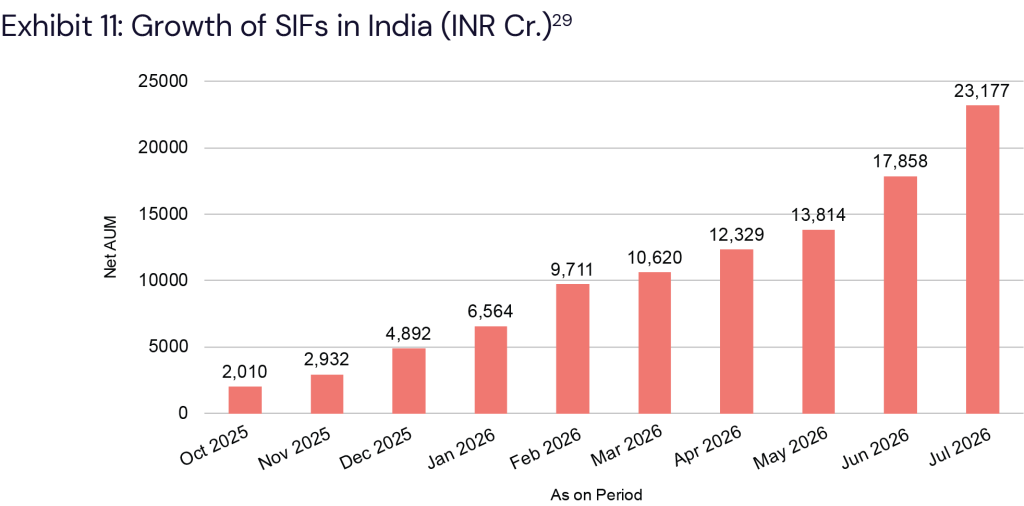
The early numbers are encouraging. But the next phase will depend on building a clear identity for the
category.
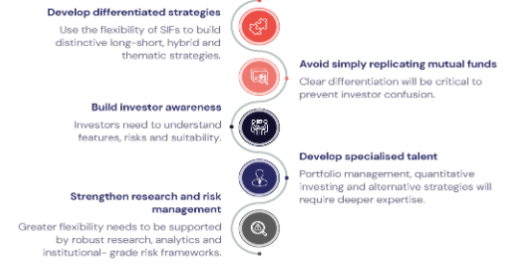
Five priorities stand out
Looking Ahead: The Next Decade of
India’s Alternatives Industry
India’s investor has more financial awareness, more investible income and a wider range of choices than
before. Mutual funds have moved into the mainstream, PMS and AIFs have expanded, and the alternatives ecosystem is becoming more sophisticated.
SIFs arrive at an interesting point in that journey. They do not need to replace mutual funds, PMS or AIFs.
Their opportunity is to occupy a distinct space: offering sophisticated and flexible strategies within a
regulated pooled structure. That makes SIFs more than a new category. They are part of a broader shift
in how Indian investors think about portfolio construction.
That makes the category’s development particularly relevant to portfolio construction, where the right
mix matters as much as the individual product, for a clearly defined portfolio role alone.
The next decade may therefore be less about asking, “What should I invest in?” and more about asking,
“What role should each strategy play in my portfolio?”
For an increasingly sophisticated Indian investor, that may be the more important question.
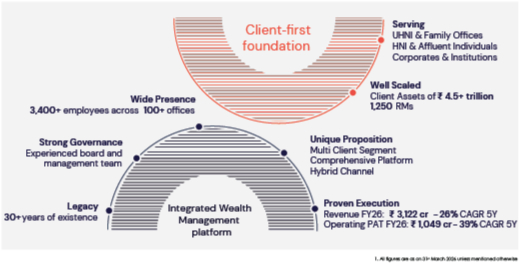
About Nuvama
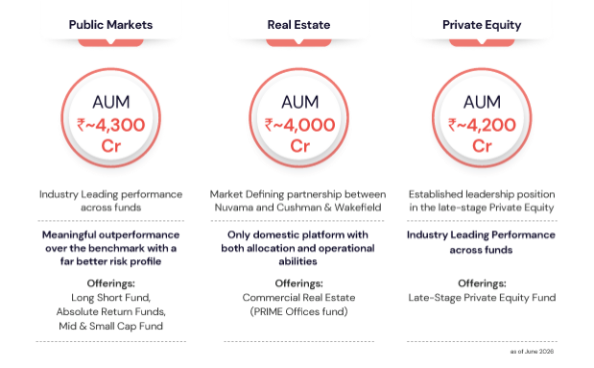
Asset Management: Strategies (Live)
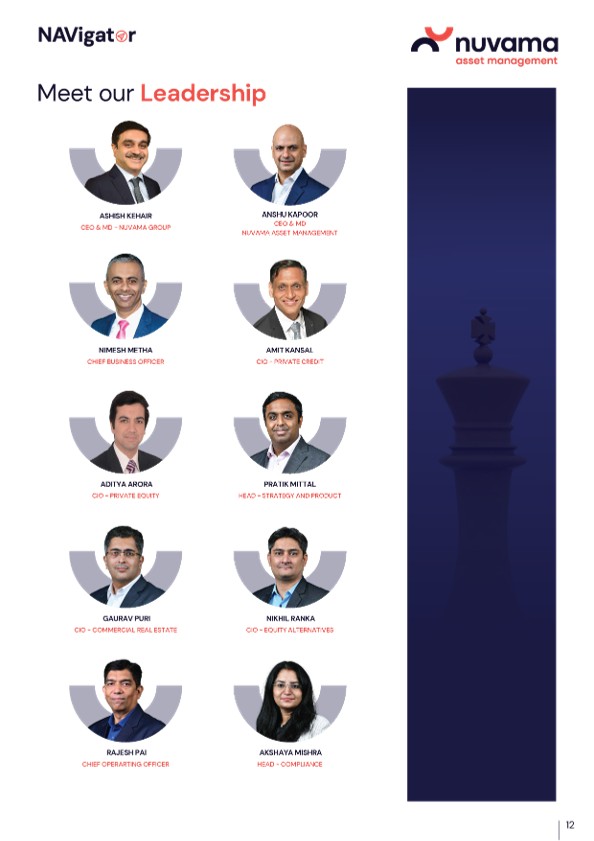
Meet our Leadership


0 comments