



As Indian investors become wealthier and more sophisticated, portfolio construction is evolving beyond choosing individual products. Specialized Investment Funds (SIFs) represent the next step in that journey – bringing strategy, flexibility and institutional investing closer to a wider set of investors.
Every mature portfolio reaches a point where adding another fund isn’t the answer
There comes a point in every investor’s journey when buying another mutual fund stops making the portfolio meaningfully better.
Consider two investors. One is just beginning with a SIP and a tax-saving fund. The other has spent a decade building wealth through mutual funds, direct equity and perhaps some international exposure.
Their question is no longer “Which fund should I buy?” but “How should my portfolio respond to different market environments?”
That is a fundamentally different conversation. Today, investors are asking different questions.
- How should a portfolio behave during prolonged market volatility?
- Should every allocation depend on the direction of equity markets?
- Can different strategies reduce dependence on a single market outcome?
That shift in thinking is perhaps the clearest indication that Indian investing has entered a new phase.
India’s investment journey has entered a new phase
A generation ago, wealth creation in India revolved around real estate, gold and bank deposits. Mutual funds were largely viewed as products for financially aware investors.
That picture has changed significantly. While physical assets continue to account for the largest share of household savings, financial assets are steadily gaining ground.
The shift is visible in the numbers. Gross household savings have increased from INR 77.7 lakh crore in 2022–23 to INR 111.1 lakh crore in 2024–25, while household savings channeled through the securities market have nearly tripled during the same period, rising from INR 2.6 lakh crore to INR 6.9 lakh crorehttps://www.sebi.gov.in/reports-and-statistics/research/may-2026/household-savings-through-indian-securities-market_101531.html
This evolution extends well beyond savings. Annual SIP contributions have grown nearly ten-fold over the past nine years, and India’s equity investor base now exceeds 130 million unique PANs, reflecting a decisive shift towards long-term market participation https://nsearchives.nseindia.com//web/mediaattachment/2026-06/Market_Pulse_June_2026.pdf
At the same time, professionally managed investment vehicles have expanded rapidly. As of March 2026, mutual fund assets stood at INR 73.7 lakh crore, PMS assets at INR 41.4 lakh crore, while commitments raised by AIFs had reached INR 16.9 lakh crore.
These trends reflect a change in investor behavior. As wealth accumulates and portfolios become more diversified, the conversation naturally shifts from selecting individual products to constructing portfolios that can pursue multiple objectives across different market environments.
It is this evolution, and not simply rising wealth, that has created space for strategy-led investment solutions such as SIFs.
SIFs are not simply another investment product
At first glance, SIFs appear to sit somewhere between mutual funds, PMS and AIFs. In reality, they represent something more fundamental: a strategy platform rather than another asset class.
Unlike traditional mutual funds that operate within clearly defined mandates, SIFs provide greater flexibility in portfolio construction. Depending on the strategy, fund managers can dynamically allocate across asset classes, use long-short approaches where permitted and actively manage portfolio risk within a regulated mutual fund framework.
This distinction is important because portfolio diversification today extends beyond combining equities and debt. Increasingly, investors seek exposure to different investment styles, return drivers and risk management techniques. SIFs broaden this toolkit while retaining the transparency and governance standards associated with mutual funds.
Exhibit 1: SIFs vs. Mutual Funds vs. PMS vs. AIFs
| Feature | SIF | Mutual Funds | PMS | AIF |
| Target Investors | Investors seeking advanced yet tax-efficient strategies | First-time to long-term investors | HNIs desiring personalized portfolio management | Ultra-HNIs & institutions exploring non-traditional assets |
| Minimum Investment | INR 10 Lakh (Across SIF Strategies) | INR 5000 (lumpsum) | INR 50 Lakh | INR 1 Crore |
| Structure | Hybrid between MF & PMS/AIF; retains MF-like taxation | Pooled, SEBI-regulated investment vehicle | Separately managed accounts with direct stock ownership | Pooled, privately placed schemes |
| Taxation at Investor Level | Similar to Mutual Funds (depending on asset class) | Tax-efficient with indexation & capital gains benefits | Based on individual tax treatment | Pass-through taxation depending on category |
| Taxation at Fund Level | Nil as per Section 10 (23D) | Nil as per Section 10 (23D) | Nil | Cat III – Capital gains @25% + Business income @MMR |
| Expense Ratio | Max at 2.25% and 2% | Max at 2.25% and 2% | Management Fee + Performance Fee | Management Fee + Performance Fee |
| Leverage | NA | NA | NA | Allowed – Gross exposure up to 200% |
| Derivatives | Naked shorts up to 25% + Hedging | Only for hedging | Only for hedging | Allowed |
By bridging the gap between traditional mutual funds and higher-ticket investment vehicles, SIFs make sophisticated portfolio strategies accessible to a wider set of investors. The emphasis shifts from choosing products to building portfolios around desired outcomes.
Where strategy becomes as important as asset allocation
Two equity portfolios can behave very differently if one follows a conventional long-only approach while the other has the flexibility to manage market exposure more actively. Rather than replacing existing investments, SIFs complement them by introducing strategies that may perform differently across market cycles.
Think of it like building a cricket team. A side made entirely of aggressive batters may flourish on a flat pitch, but a balanced team is better equipped to handle changing conditions. Likewise, portfolios built with complementary strategies are often more resilient than those relying on a single investment style.
The message is clear today: portfolios are becoming more diversified not just across asset classes, but also across investment approaches. SIFs fit naturally into this broader evolution rather than creating an entirely new trend.
Different investors, one common objective
Whether it is an entrepreneur preserving newly created wealth, a family office managing assets across generations or a salaried individual whose portfolio has outgrown traditional mutual funds, the need is increasingly the same: greater flexibility in portfolio construction.
With a minimum investment threshold of INR 10 lakh, SIFs bridge the gap between conventional mutual funds and higher-ticket structures such as PMS and AIFs. They broaden access to institutional-style investment strategies while remaining within a familiar, regulated framework.
Why the timing couldn’t be better
India’s capital markets have matured alongside its investors. Between June 2021 and June 2026, BSE market capitalization more than doubled (106%) https://www.bseindia.com/markets/equity/eqreports/allindiamktcap_histori, while the outstanding corporate bond market expanded from INR 17.5 trillion in FY15 to INR 53.6 trillion in FY25 https://www.pib.gov.in/PressReleasePage.aspx?PRID=2219998&utm_source=chatgpt.com®=48&lang=2.
The mutual fund ecosystem has evolved in parallel, offering 1,945 schemes across asset classes and managing over INR 82 lakh crore in assets by mid-2026 https://www.amfiindia.com/uploads/AMFI_Monthly_Note_June2026_110c873c23.pdf. This depth and diversity have created the foundation for more sophisticated investment solutions such as SIFs.
Exhibit 2: Growth of SIFs in India
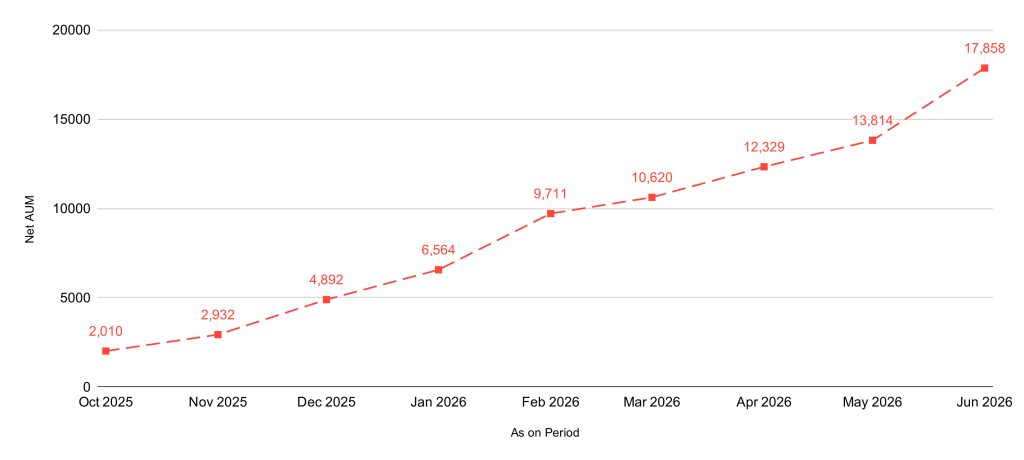
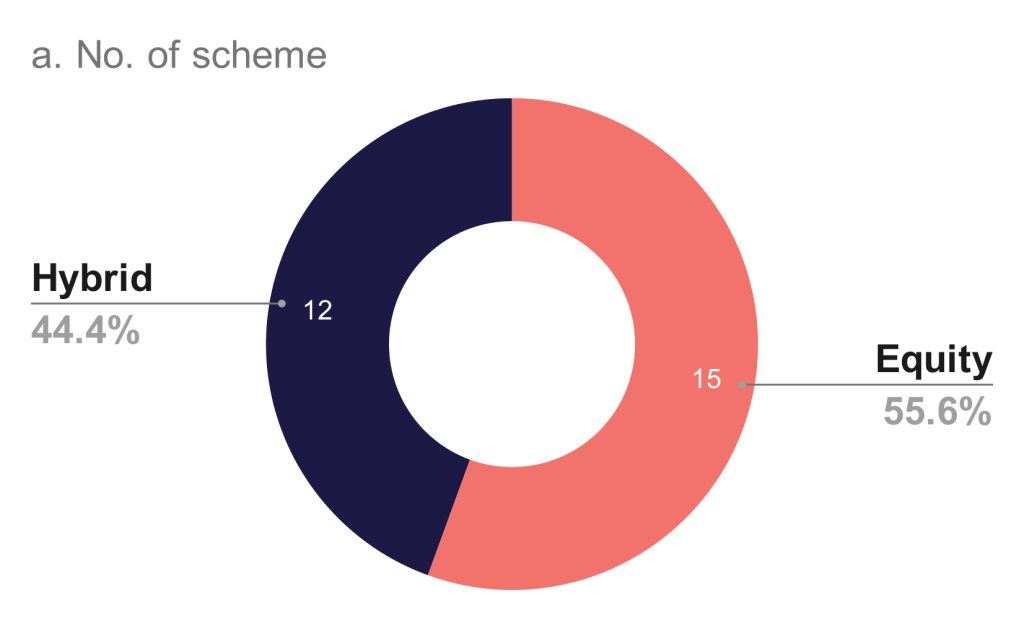
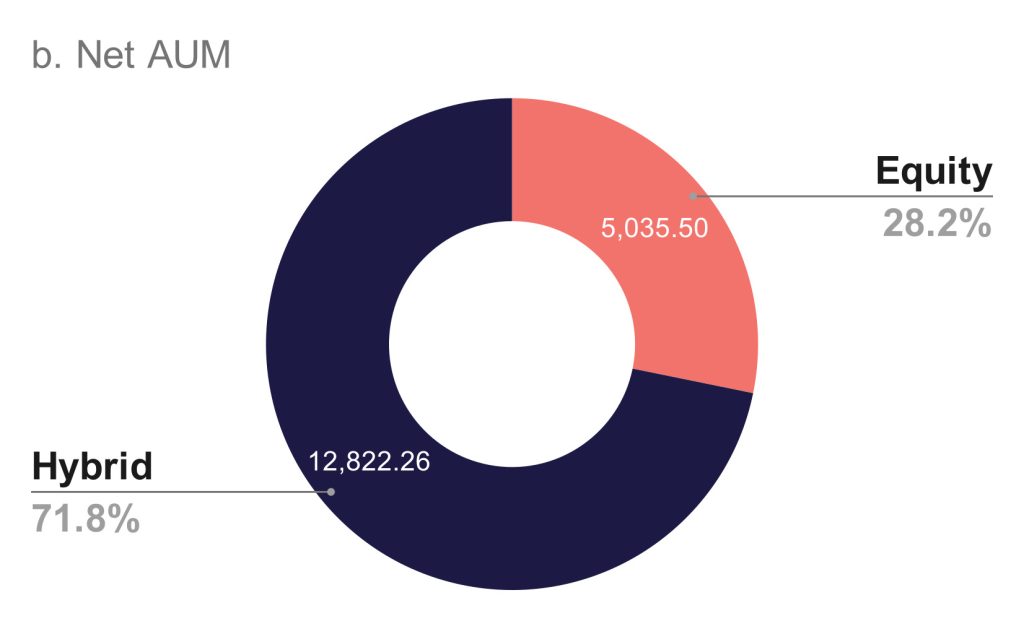
Exhibit 3: SIF Strategies contribution (As of June 2026)
The industry’s early response reinforces this narrative. Net SIF assets under management increased from INR 2010 crore to INR 17,858 crore, from Oct 2025 to June 2026, a rise of roughly 9x growth.
Over the same period, the number of participating asset managers almost tripled from five to fourteen, while 27 investment strategies were launched, with hybrid strategies accounting for nearly 72% of industry assets. For a category that is still in its infancy, these early trends suggest that investors are responding positively to a more flexible approach to portfolio construction.
The next chapter in India’s investment journey
Every stage of India’s investment evolution has expanded investor choice. Mutual funds democratized professional investing. PMS and AIFs introduced greater customization for affluent investors. SIFs represent the next step in that progression – not by replacing existing products, but by filling the space between them.
Strategy, diversification and risk management are becoming as important as asset allocation itself.
That is why SIFs matter. They are not simply another category within the mutual fund universe. They represent the natural evolution of an investment ecosystem that has matured alongside its investors, offering a more strategic approach to building resilient portfolios for the years ahead.
This article is part of The NuTake — Nuvama Asset Management’s ongoing series on investment frameworks, market structure, and the evolving landscape of alternatives. If this perspective is resonated, we invite you to explore the full series or speak with your Nuvama relationship manager.
Disclaimer:
This document is for informational and educational purposes only and should not be regarded as an offer to sell or as a solicitation of an offer to buy or sell the securities or other investments mentioned in it. Recipients are advised to conduct their own research and seek professional advice before making any investment decisions. The document is prepared on the basis publicly available information, internally developed data and other sources believed to be reliable. All opinions, figures, charts/graphs, estimates and data included in this document are as on date specified therein or as on date and are subject to change without notice. The views provided herein are general in nature and do not consider risk appetite or investment objective of any particular investor; readers are requested to take independent professional advice before investing. This document is intended for the direct recipients only and should not be circulated without prior consent of Nuvama Asset Management Limited (“NAML”). The document is not directed or intended for distribution to or use by any person or entity who is a citizen or resident of or located in locality, state, country or other jurisdiction, where such distribution, publication, availability or use would be contrary views to local law, regulation or which would subject NAML and its affiliates to any registration or licensing requirement within such jurisdiction. The securities described herein may or may not eligible for sale in all jurisdiction or certain categories of investors. Persons in whose possession this document are required to inform themselves of and to observe such restrictions. Nuvama Asset Management Limited (“NAML”), it’s Holding Company, associate concerns or affiliates or any of their respective directors, employees or representatives do not assume any responsibility for, or warrant the accuracy, completeness, adequacy and reliability of such information or any direct, indirect, special, incidental, consequential, punitive or exemplary damages, including lost profits arising in any way from the information contained in this material. Whilst no action has been solicited based upon the information provided herein, due care has been taken to ensure that the facts are accurate, and opinions given are fair and reasonable. NAML is registered with Securities and Exchange Board of India as a Portfolio Manager vide Registration Number INP000007207 and acts as Investment Manager for various AIF schemes with registered office at 801- 804, Wing A, Building No. 3, Inspire BKC, G Block, Bandra Kurla Complex, Bandra East, Mumbai – 400 051. Corporate Identity No: U67190MH2019PLC343440.
0 comments