


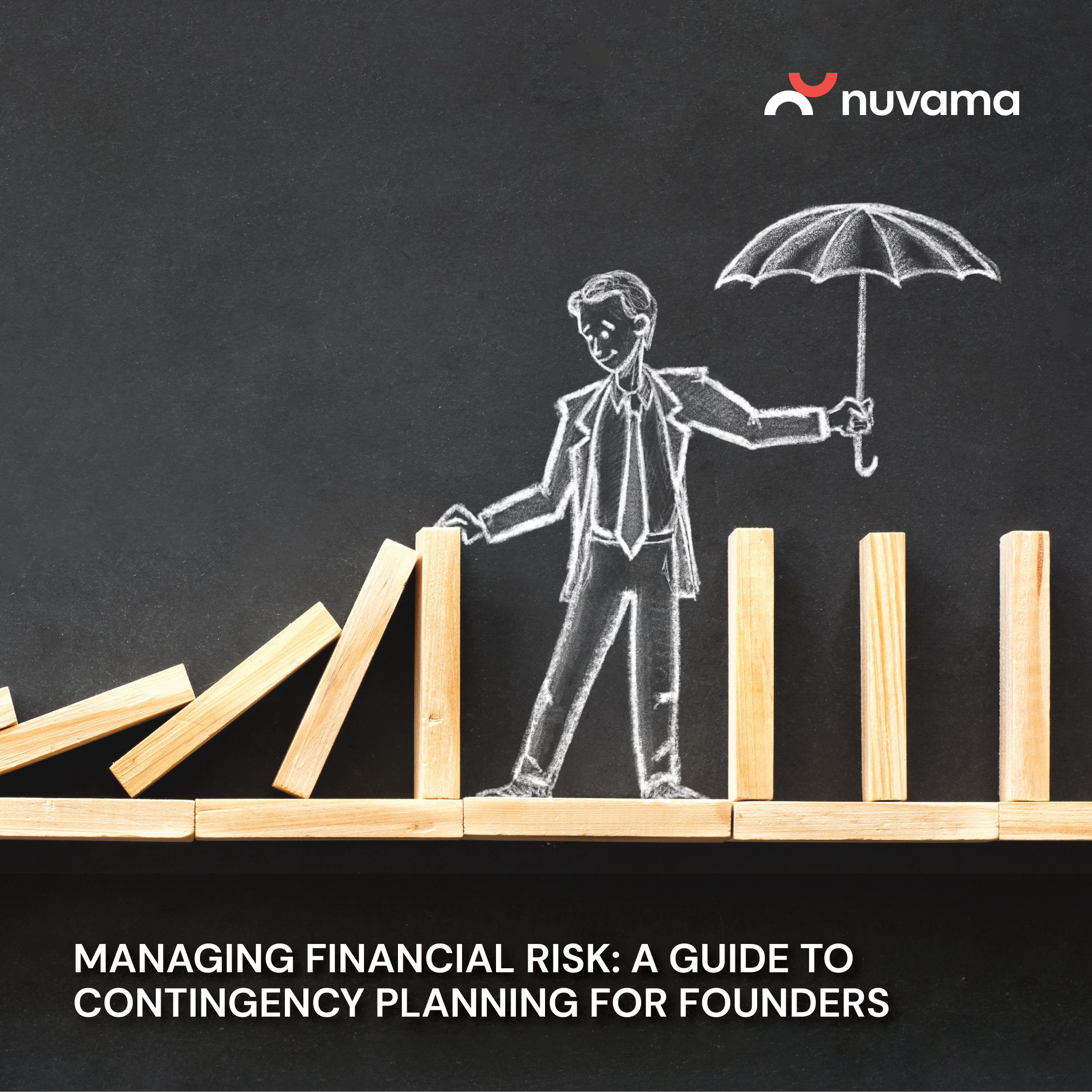
Every business starts with a belief, a philosophy, and an unparalleled zeal to succeed. But every business survives through planning. Founders often focus on growth, scale and opportunity. These are important. But protection is equally important. If the risk is not controlled, the reward will not last. That is where financial risk management enters the picture.
Running a business in a volatile economy involves exposure to unpredictable factors. Currency shifts, regulatory moves and market cycles affect more than profit. They impact long-term personal wealth. A business owner’s financial plan must include risk protection. Not just at the business level. But also at the personal level. This blog explains how to build a strong contingency plan that protects both.
Understanding the Link Between Business and Personal Wealth
For many founders, the business is the core wealth generator. Ownership stakes, salaries, retained earnings and dividends form the foundation of financial wellbeing. But this structure creates concentration. If the business faces a setback, personal wealth often suffers.
That is why wealth management for entrepreneurs must be approached differently. Founders need to see their business not just as an income source. It is also a risk source. Over time, financial health depends on separating these two. The business must be allowed to grow. But the individual must also prepare for disruptions.
What is Financial Risk Management?
Financial risk management is the process of identifying risks, assessing their impact and building solutions to deal with them. It is not about predicting the future. It is about being ready for the future even when it is unclear. There are four common risk management strategies:
- Avoidance: Deciding not to take a particular risk if it can be sidestepped altogether.
- Reduction: Taking measures to reduce the impact or frequency of a specific risk.
- Transfer: Using tools like insurance or contracts to pass the risk to another party.
- Retention: Accepting the risk and preparing to absorb its impact when it occurs.
Founders use these strategies across business and personal finance. For example, taking insurance on equipment is a form of risk transfer. Diversifying personal investments outside the business is a form of risk reduction.
Building a Strong Contingency Plan
A contingency plan is not a backup wish. It is a structured response to future uncertainty. Founders need contingency planning in three areas: business operations, personal finances and legal obligations. On the operational side, the plan includes liquidity buffers, supplier alternatives and key personnel backups. On the financial side, the plan includes cash reserves, credit access and alternate income channels.
It must also cover succession arrangements, partnership protection and access to decision-making power in emergencies. If the founder becomes unavailable due to health or travel, the business should not lose its financial direction. The plan must be reviewed often. It must be realistic. And it must be known to the people who will act on it.
Strategic Risk Management for Entrepreneurial Wealth
When wealth is tied to a business, planning must be layered. Holistic wealth management is not about picking the best investment. It is about aligning liquidity, debt, taxation and lifestyle goals in a way that works together.
The first step is separating business balance sheets from personal portfolios. The second step is identifying exposures across both. For example, if the business carries dollar loans and the founder holds only local currency assets, currency risk needs addressing.
Another part of risk management in wealth management is scenario modelling. What happens if product demand slows? What if credit costs rise suddenly? What if regulatory changes affect margin? Advisory support helps model these scenarios. Founders can then build buffers, hedge exposures or redesign capital flows. This shifts the plan from reactive to responsive.
How Wealth Management Firms Support Founders in Risk Mitigation
A strong advisory partner understands both the business context and the individual’s needs. A good wealth management firm brings structure, discipline and foresight into the planning process. The role of advisors is to uncover blind spots. They help convert risks into measurable metrics.
They identify overlaps where the same risk affects both business and personal wealth. They design solutions that work across timelines. For instance, they may recommend staggered equity liquidation, insurance-backed loans, trust-based succession structures or tax-friendly drawdowns. These are not quick fixes. They are frameworks built to preserve wealth while sustaining the business. The founder remains in control [but with better visibility and stronger tools].
Conclusion
Entrepreneurs drive progress through action and resilience. However, protecting the value they build is just as important as creating it. Financial risk management helps them prepare for uncertain conditions without slowing their momentum. A well-structured contingency plan creates that balance
It allows founders to move forward with purpose while protecting their wealth at every stage. To explore this further, the team at Nuvama can offer clear and relevant support. For tailored guidance that supports both vision and protection, the team at Nuvama is here to help.
FAQs
How can founders integrate business risk management with personal wealth strategies?
Founders can reduce duplicated exposure and design a structure that preserves personal wealth during business disruption simply by aligning both frameworks, i.e., business risk management with personal wealth strategies, early.
What are the most effective contingency tools for financial risk mitigation?
The most effective contingency tools are accessible savings, lines of credit, shareholder agreements, and insurance policies. These tools protect the cash flow and control business operations during unforeseen events.
How does holistic wealth management enhance long-term business sustainability?
It brings personal and business goals into one plan, improving liquidity access, tax flow efficiency and readiness across changing operational conditions.
When should entrepreneurs revisit and update their contingency plans?
A review is needed once each year or whenever a new risk, legal shift or personal milestone could affect continuity or financial protection.
Disclaimer:
The views, beliefs and viewpoints expressed are only for educational and informational purposes and are made in the personal capacity and not as an advisor or an analyst of any company. With respect to the contents of the article/ video, we make no representation or warranty, express or implied, whatsoever, and no reliance shall be placed on the truth, accuracy, completeness, fairness and reasonableness of the same.
The content of this article/ video shall not be considered as an invitation or persuasion to trade or invest securities/ investment products, nor shall it be considered to be solicitation/ advertisement or promotion of any services.
The viewers of this article/ video should make such analysis as they deem necessary to arrive at an independent evaluation and should consult duly registered advisors to determine the merits and risks of market investments. Investments in securities market are subject to market risks, read all the related documents carefully before investing.
There is no obligation to update, modify or amend this communication or to otherwise notify the viewers if the information views, beliefs and viewpoints expressed in the article/ video, changes or subsequently becomes inaccurate.
We shall not be responsible for any error or omission or any loss or damage that may arise to any person from any such error or omission in the information contained in this article/ video and any action taken by the viewers on the basis of the information contained herein is their responsibility alone.
0 comments